Skulle motstånd fortfarande kunna uppstå här? [Would resistance still be possible here?] (2025)
Commissioned by Bildmuseet, Umeå, Sweden. Curated by Anca Rujoiu.
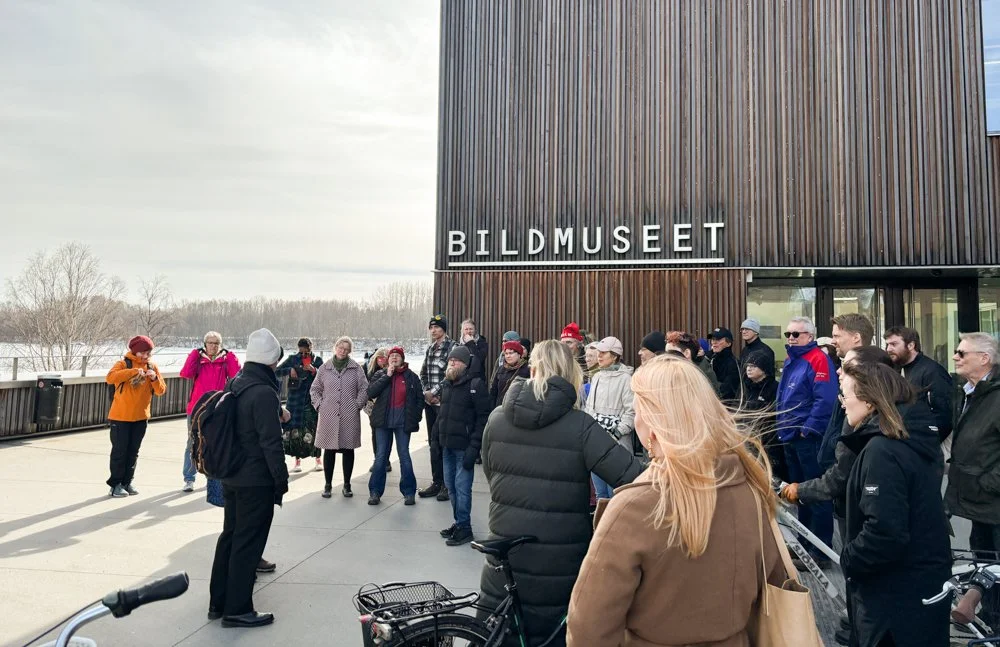
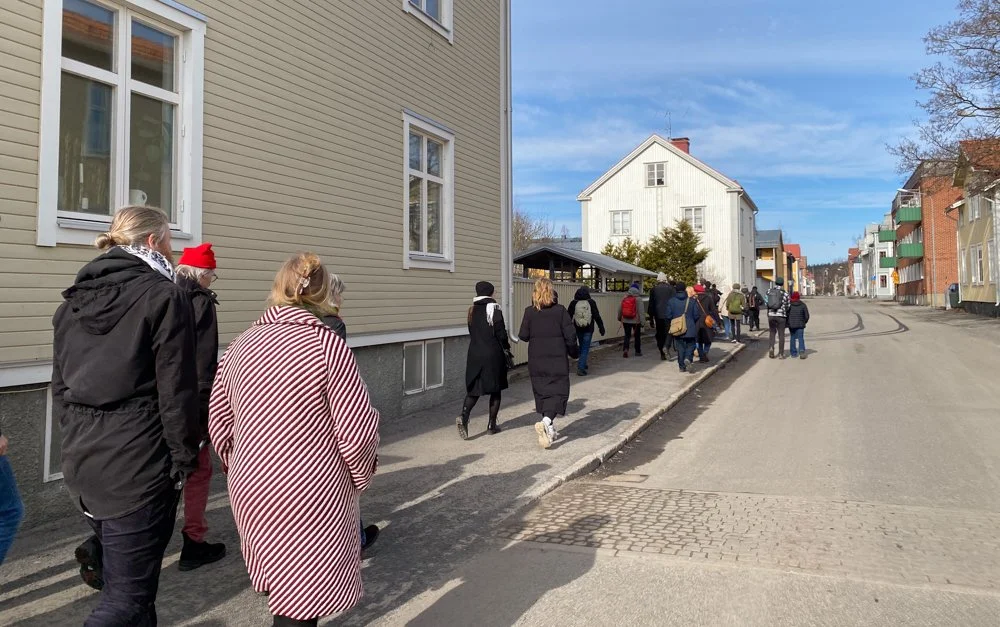
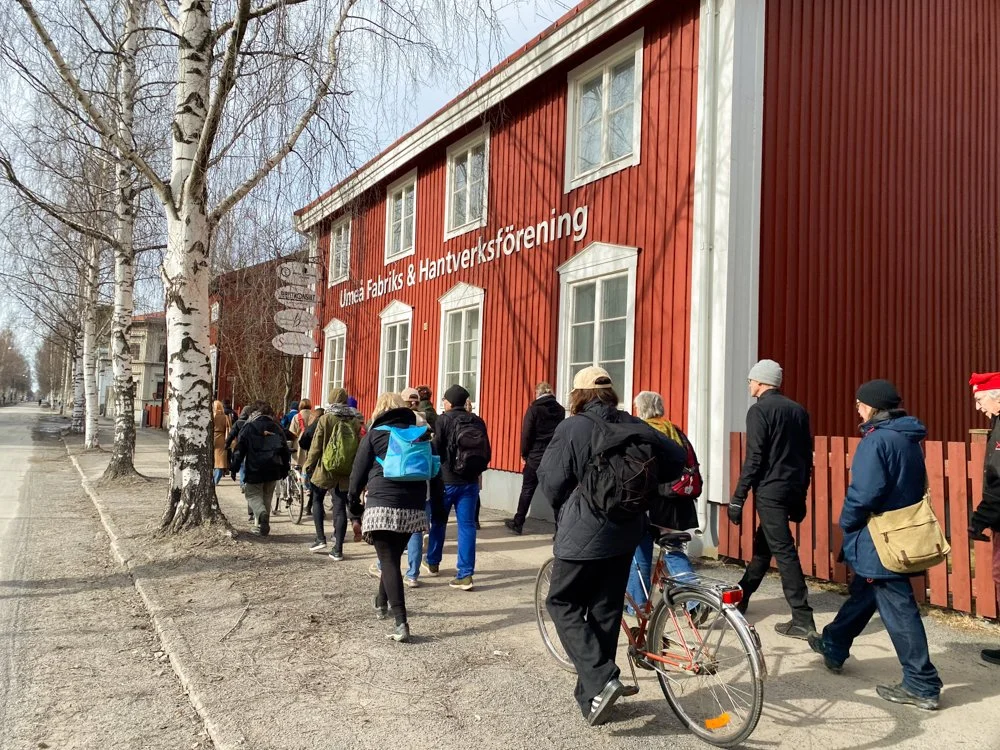
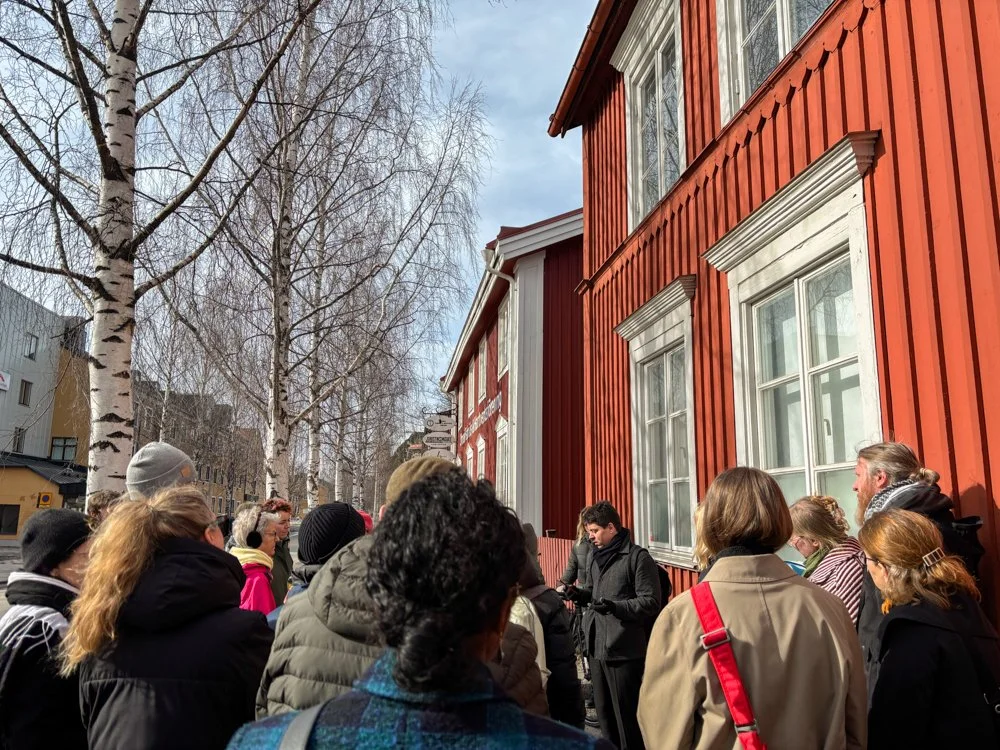
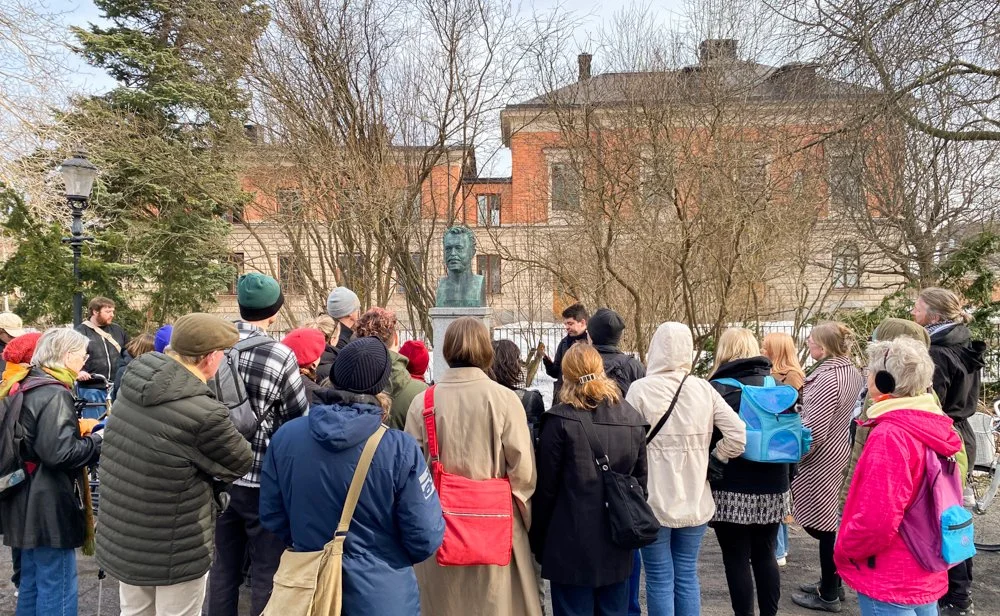
Skulle motstånd fortfarande kunna uppstå här? [Would resistance still be possible here?] was a performative collective walking score through central Umeå. Developed in connection with The View from Above, an exhibition by artist Aseel AlYaqoub at Bildmuseet, the work moved through a series of sites where heritage, public space, surveillance, hospitality and political imagination could be approached through shared movement, attention and small actions.
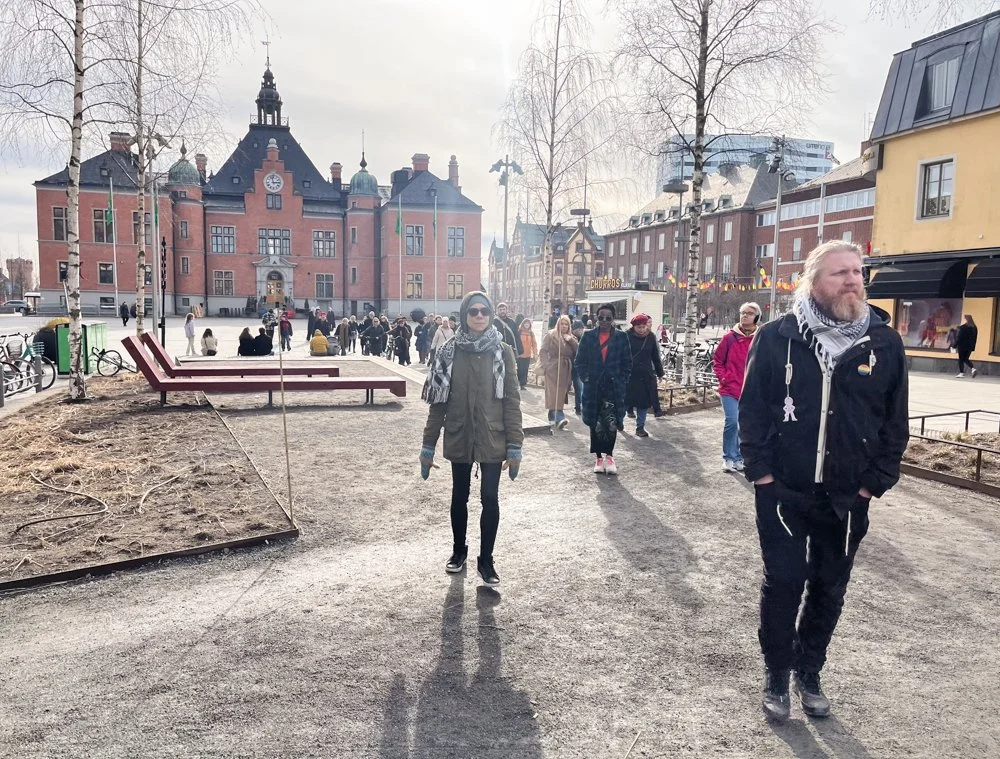
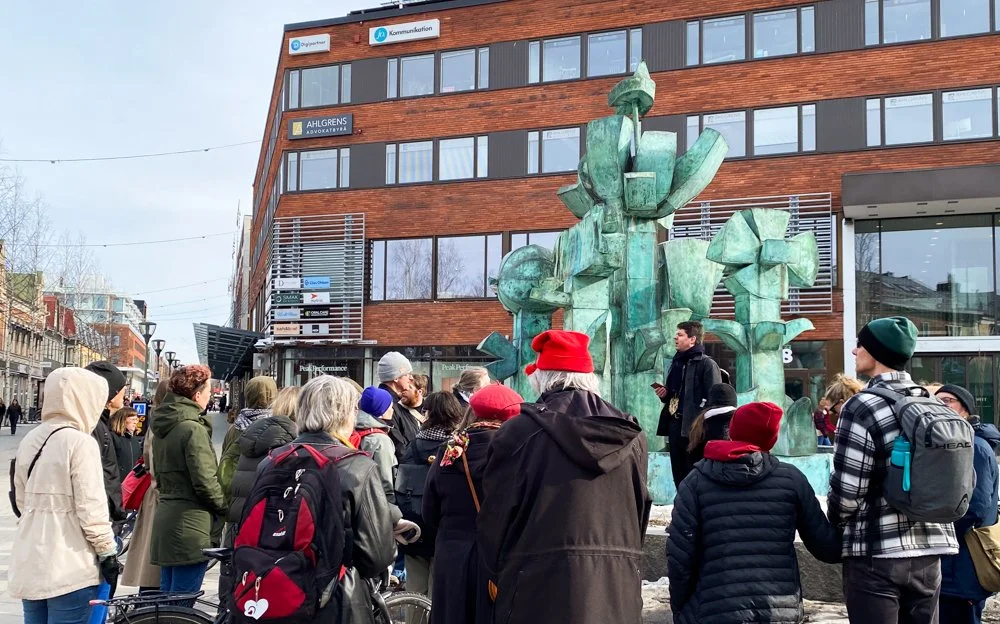
The score followed a route of eight planned stops, including a heritage-protected home, public artworks, protected buildings, a CCTV camera, Rådhustorget and Renmarkstorget. It combined short introductions, questions, gestures, periods of silence and timed walks.
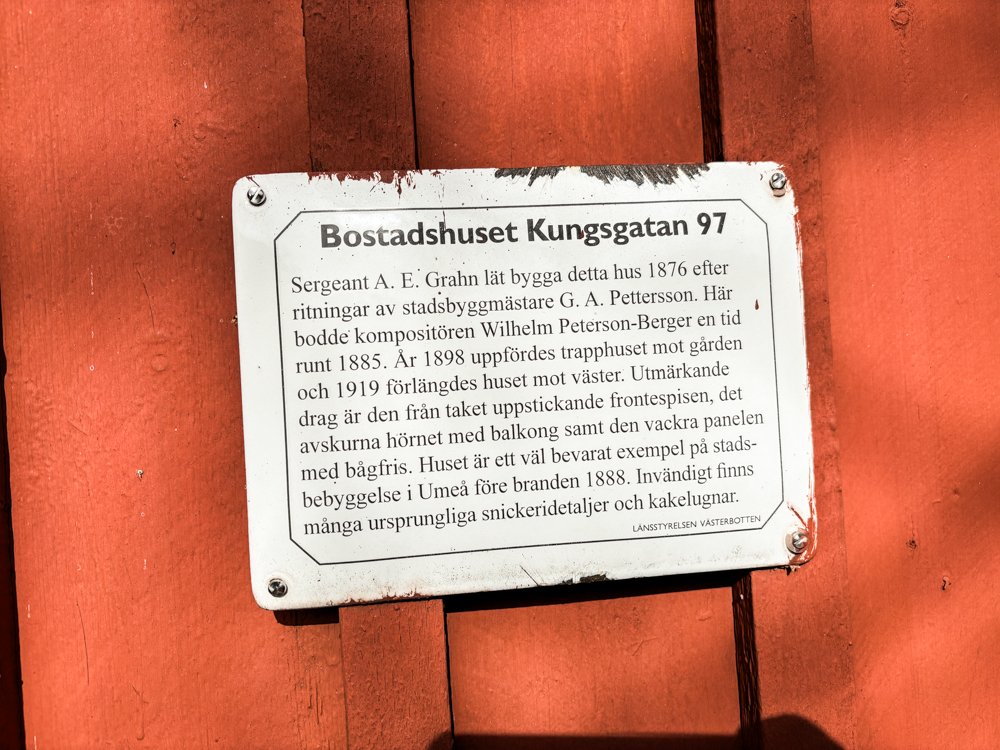
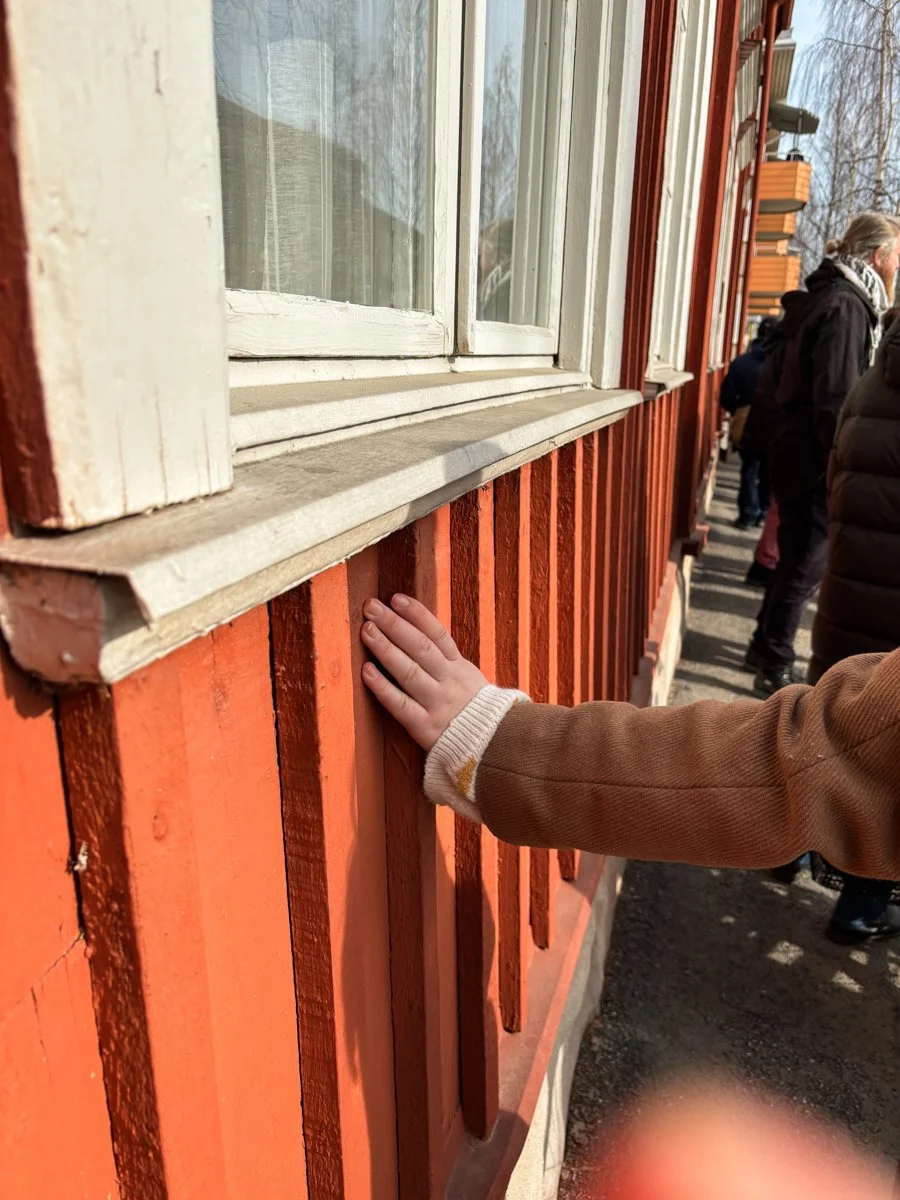
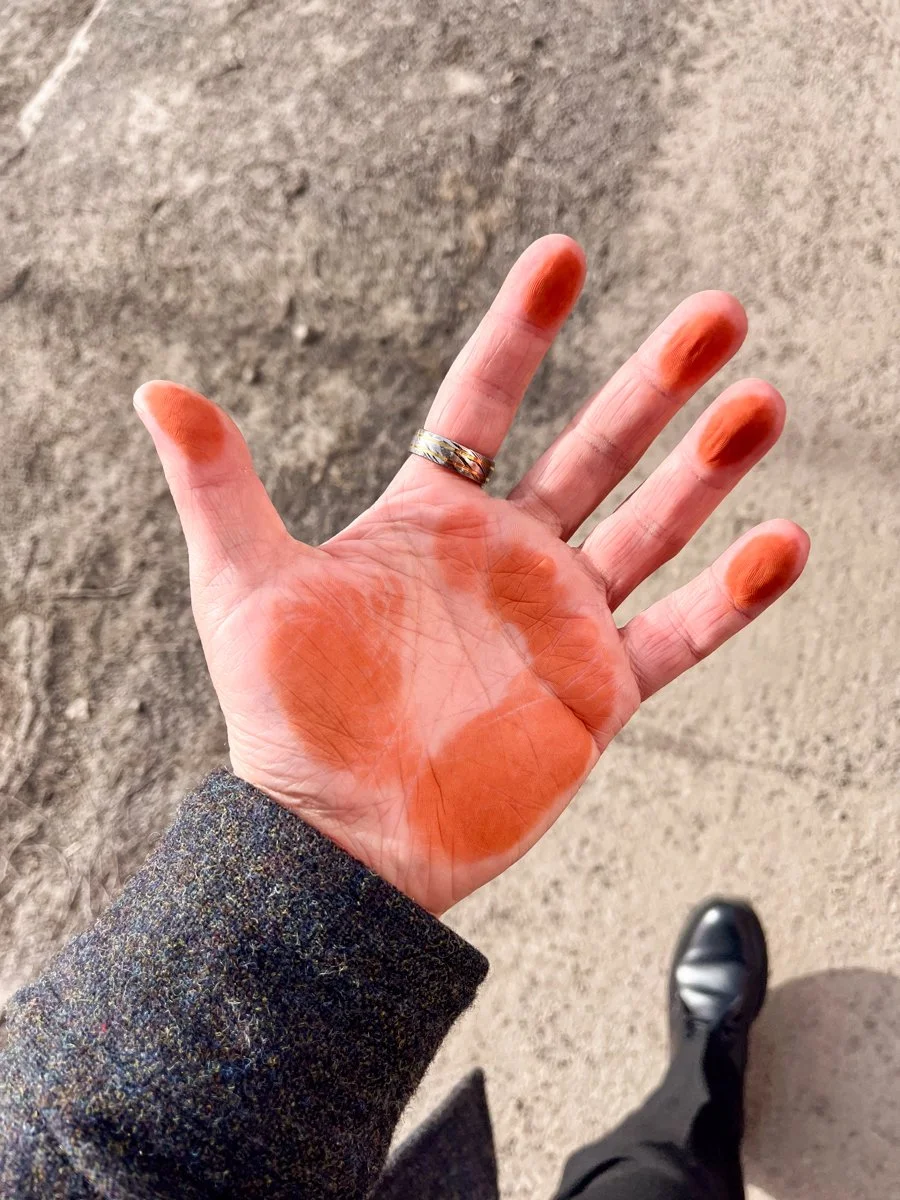
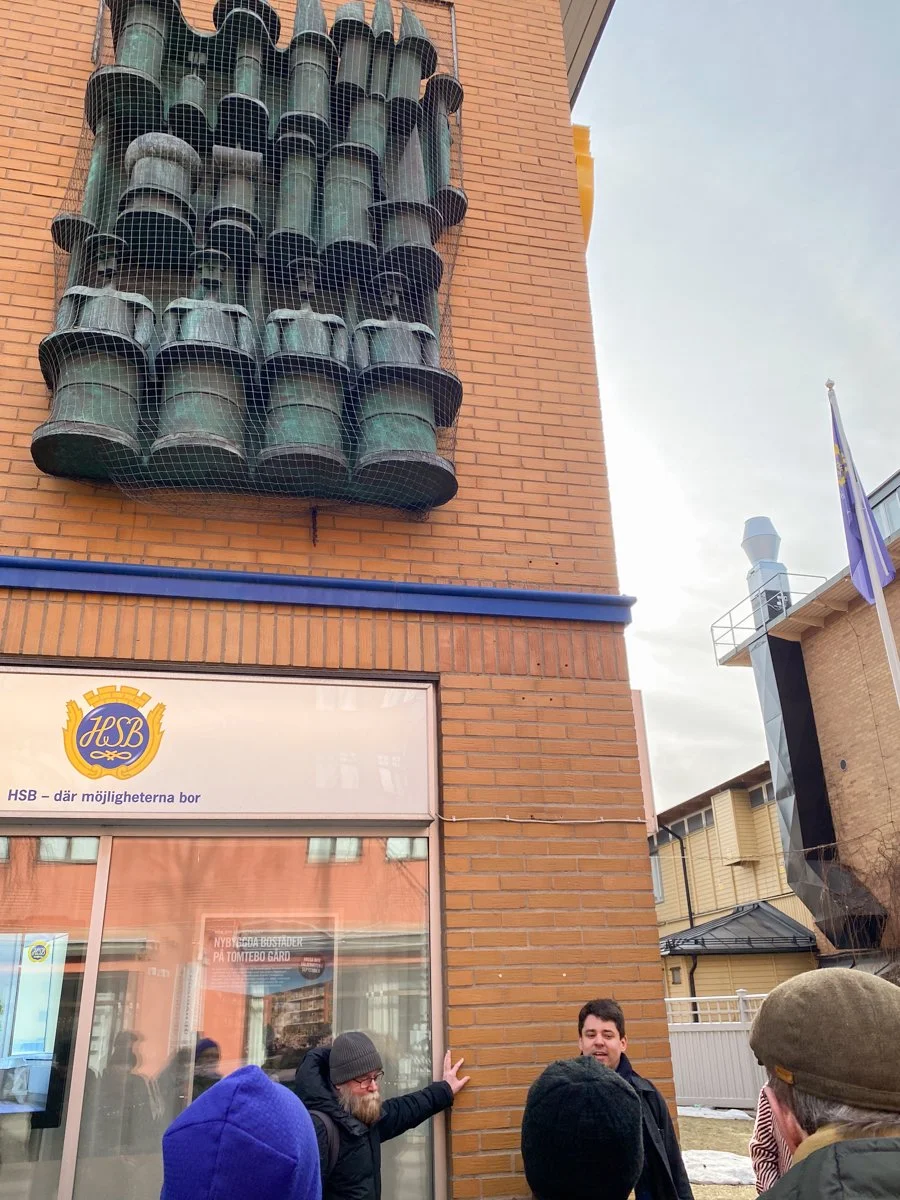
Early in the walk, participants introduced themselves to someone they had not met before and shared why they had joined. At a heritage-protected house associated with Wilhelm Peterson-Berger, a national-romantic composer and music critic, the group read the building’s plaques and was asked to touch its façade, carrying red pigment on their hands as they continued.
The route also considered how Sámi culture is encountered—or not encountered—in Umeå’s public space. Conversations during the walk referred to Västerbottens Museum as an important place to encounter Sámi cultural history, while asking what it means when Sámi presence is less visibly or permanently represented through the city’s public artworks, symbols and everyday sites.
The walk was developed in response to questions raised by AlYaqoub’s solo exhibition at Bildmuseet, around nationalism, nation-building and the ways power is organised through images, space and public narratives. Moving from Bildmuseet into central Umeå, it brought these questions into contact with the city’s sites, public artworks, heritage markers and official narratives, while asking what forms of protest, resistance or other political imaginaries might still arise there.
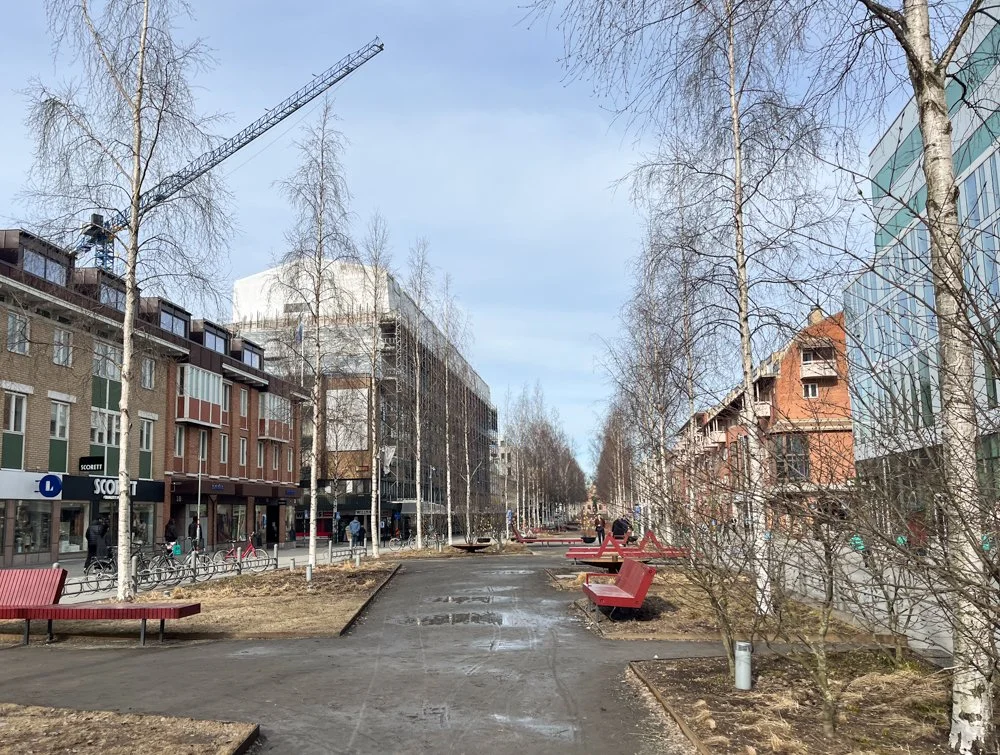
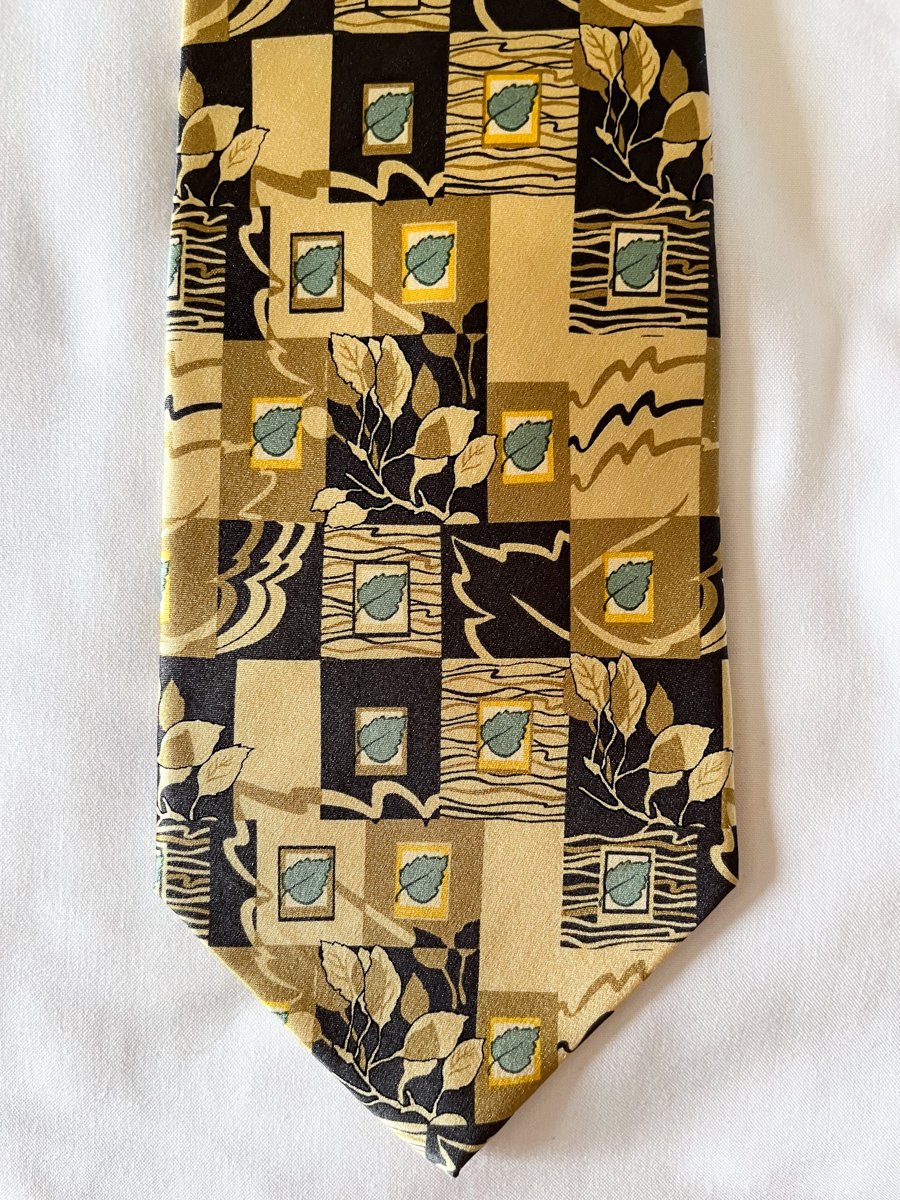
Another point of interest was a silk tie I wore during the walk. Commissioned by Umeå municipality and found in a local second-hand shop, it carried a birch-leaf pattern. Introduced as part of nineteenth-century fire-safety planning and extensively replanted after the 1888 city fire, Umeå’s birch avenues have become part of the city’s visual identity and historical memory.
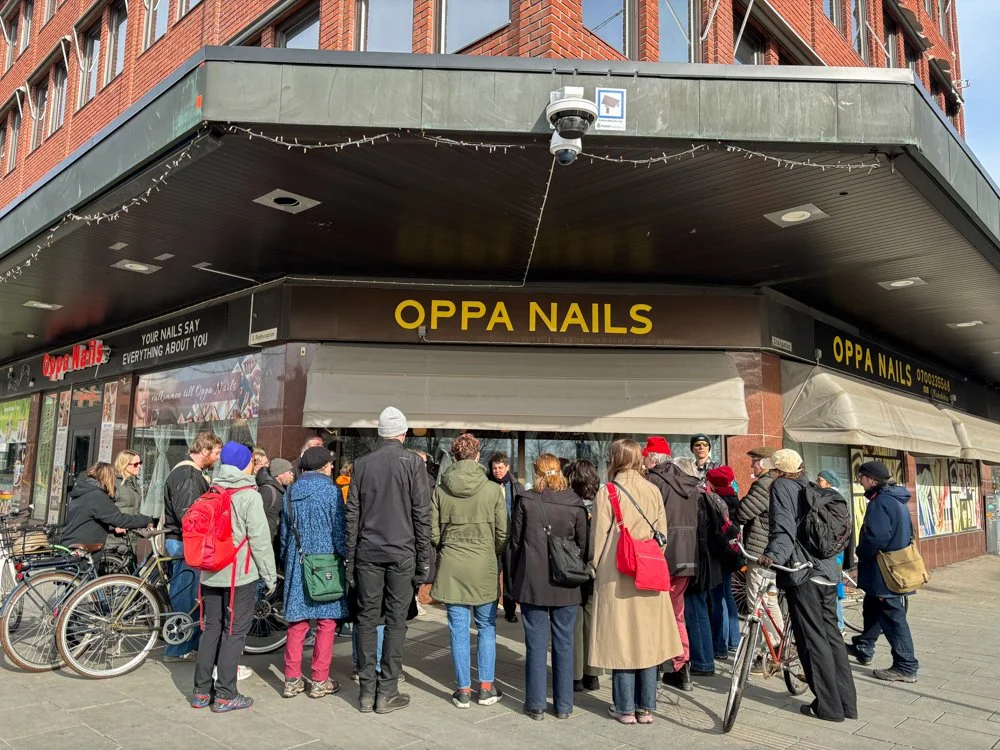
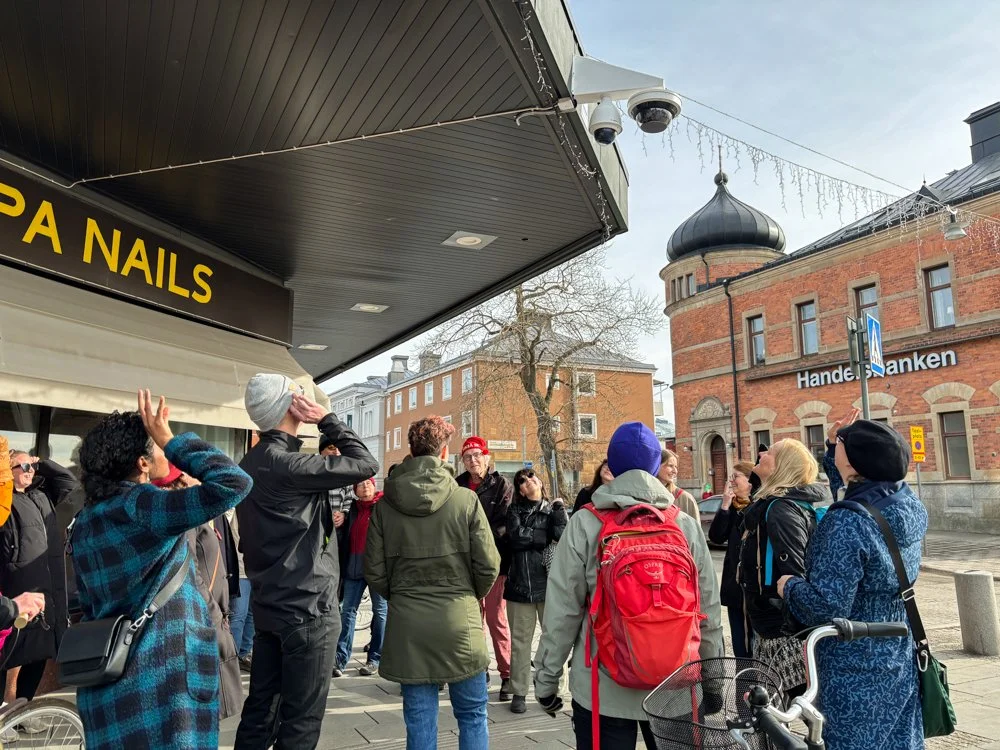
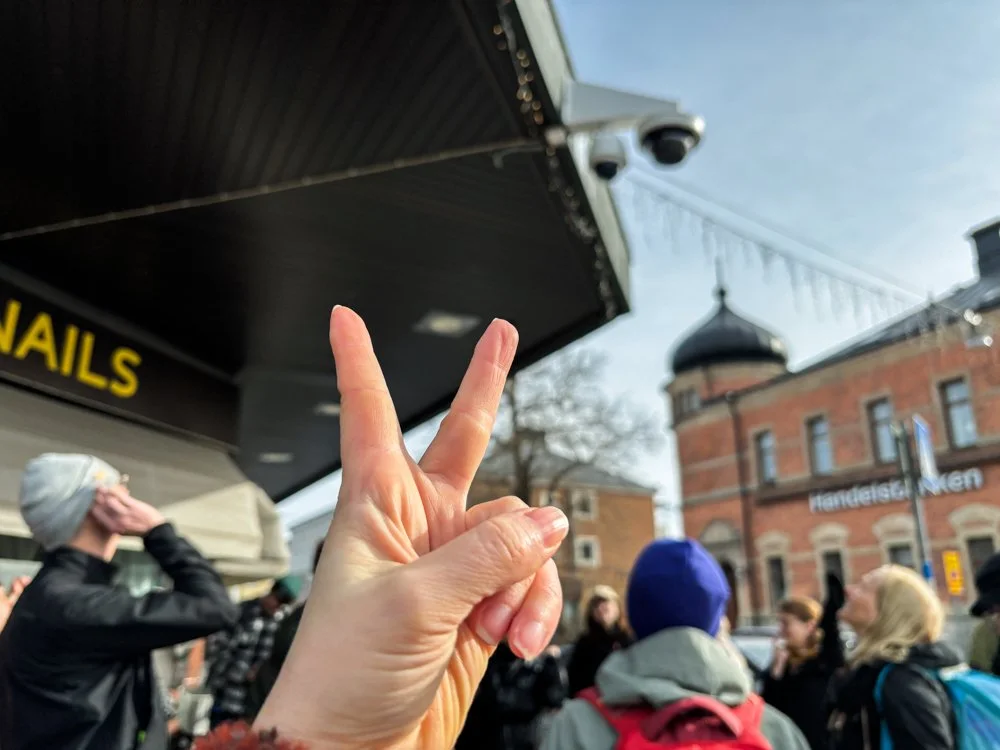
At Människans boning, the group stopped for a moment of prayer for the city. Participants could pray, remain silent or take part in their own way. At a police CCTV camera, the group posed together for the camera, holding their chosen gestures for a minute. The walk also passed silently through Rådhustorget before ending at Renmarkstorget with final questions and an open conversation.
The question in the title ran through the walk’s attention to what is preserved, named, commissioned and made visible in Umeå, and to what remains absent, redirected or difficult to encounter in public space. It brought the city’s narratives of resistance into relation with questions of Sámi presence, heritage, surveillance, redevelopment and municipal self-representation, asking which memories, perspectives and forms of resistance might still find space to appear.
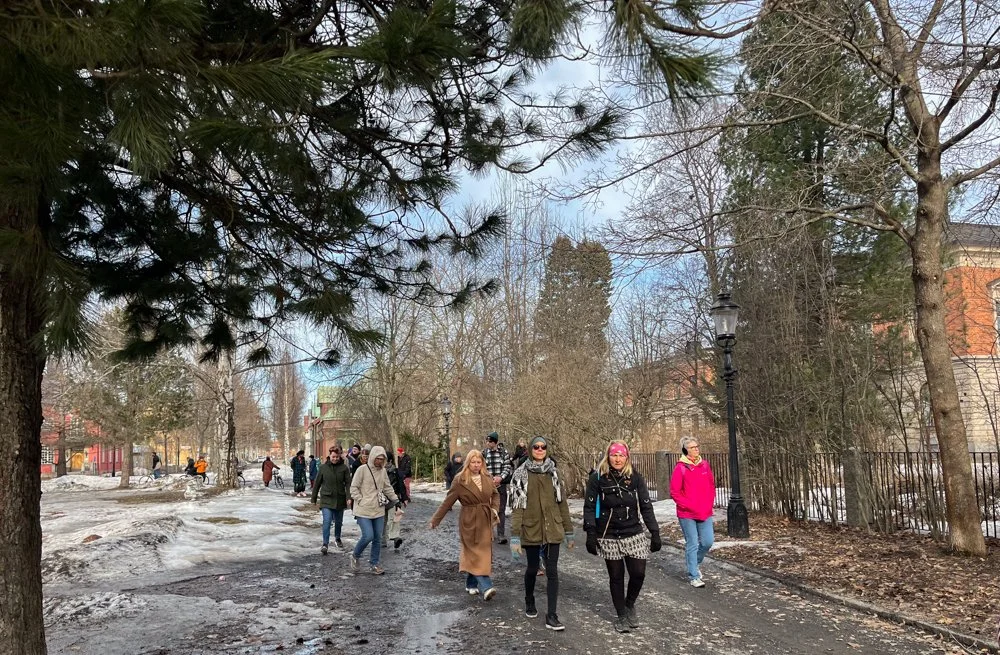
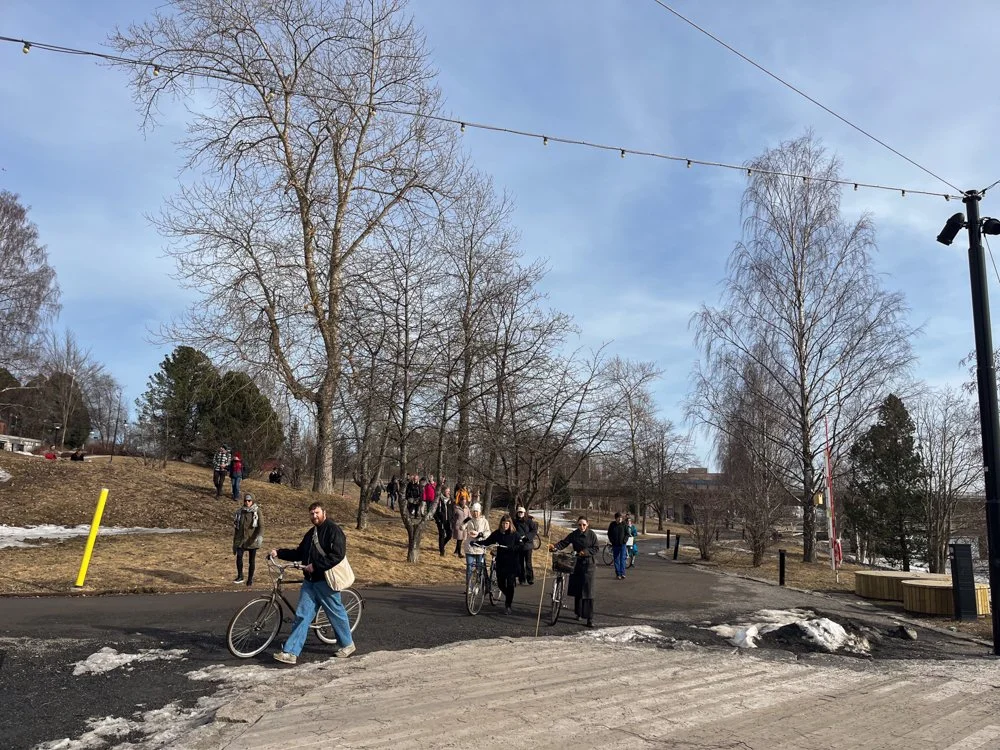
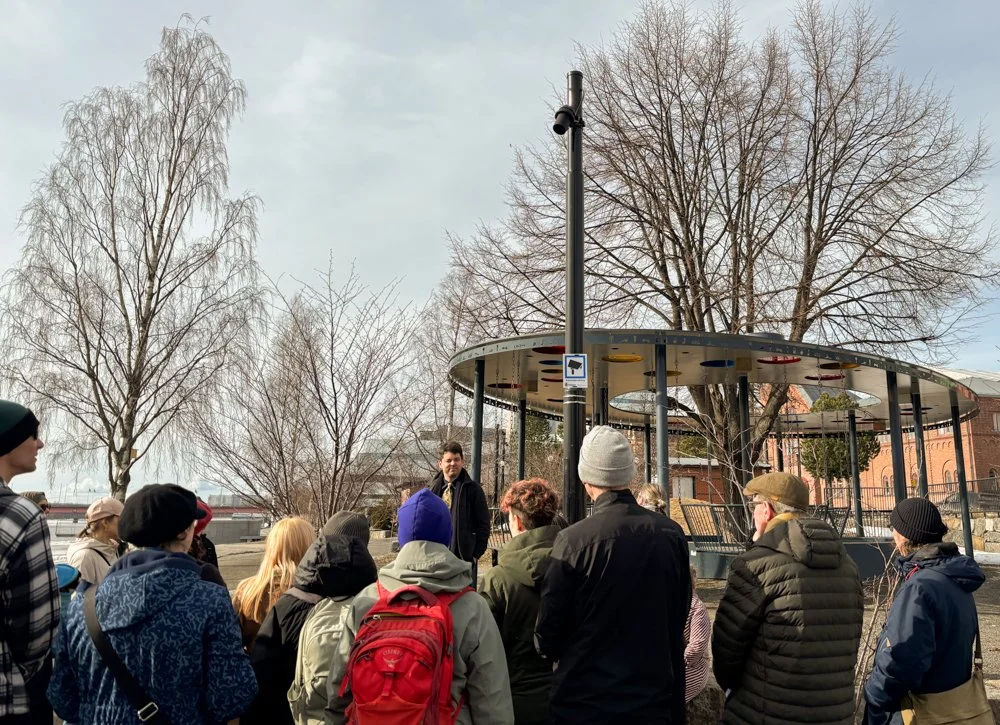
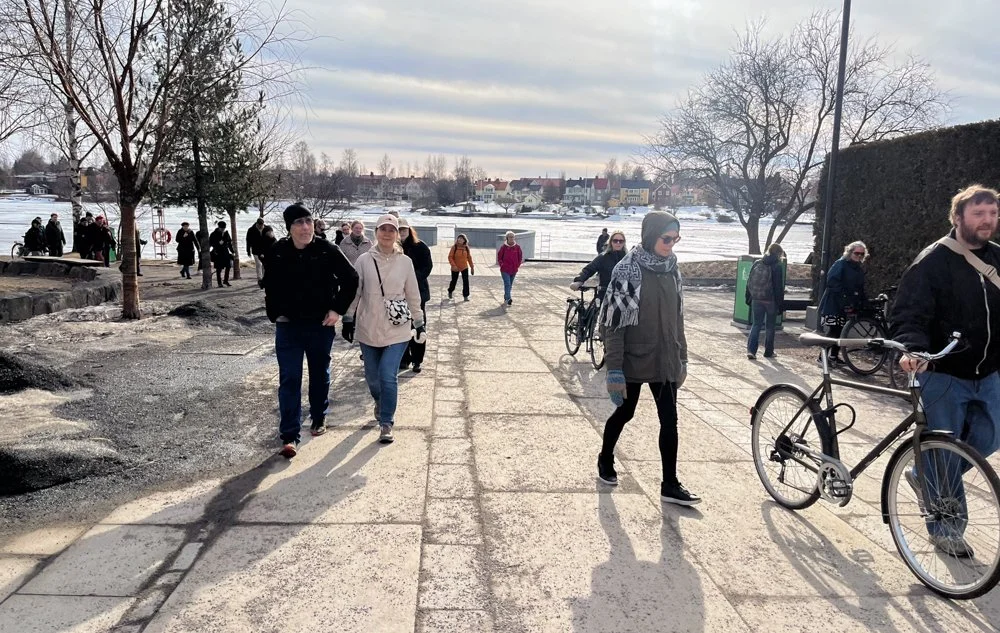

Documentation images by Kjell Caminha, Lisa Lundström and Anca Rujoiu.